
Your Wire Mesh Partner
Add Integrity to The Structures Using the Woven Mesh Wires!
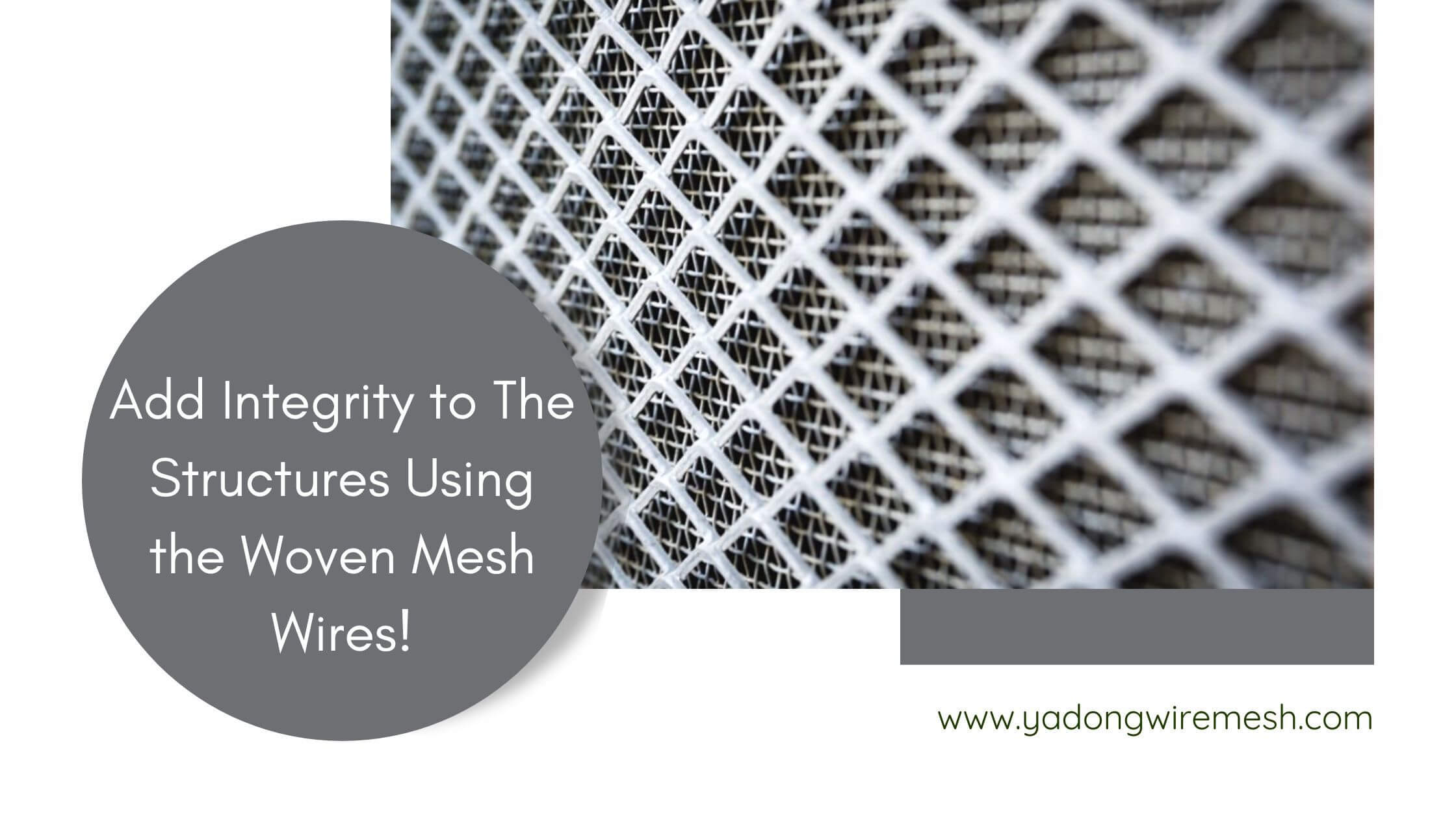
Woven Mesh Wires are widely used worldwide. This is because woven-mesh wires are among the world's most versatile materials. These mesh wires facilitate various operations worldwide. The structure, with its dynamic look, is designed to filter out all unwanted contaminants from the product. They are designed to affect people's everyday lives. At first glance, it may not be easy to understand exactly what is going on; however, it often raises questions about what these wire meshes are and what purpose they serve. To learn more about these products and how they can help the people around us, we need to understand what these products are and how to use them to get the most out of them.
What is woven wire mesh?
When we talk about woven wire mesh, it is also referred to as woven metal mesh, wire cloth, and rolls, as these are rolls or sheets that consist of layers of interlocked metallic wires that have been through a process of weaving to make a specific weave pattern, giving it a chain-like look. The number of individual cables used to construct these meshes depends on the weave pattern, wire size and diameter, aperture size, micron rating, width, and length. These factors determine how many wires are needed to construct a perfect woven wire mesh.
How is a Woven Wire Mesh made?
When we talk about how a woven wire mesh is made, it involves a special type of loom designed to work best with metallic wires. Using this design and pattern loom is usually set to weave around 48”, 60”, or 72” but nowadays we could see the availability of 98” and wider sizes as well. The weaving technique used to manufacture these wire meshes is similar to those used by woven mesh wire manufacturers, which are in turn similar to those used in the weaving of clothes. As the weaving looms work, they interlock each wire using tension at each cross section to keep the mesh intact. Based on recent technology, the opening sizes range from 5 microns to 4 microns.
Types of Wire Mesh
Almost all types of woven wire mesh are produced using the same process. However, it is noted that the wire mesh is available in three types, each with its own benefits and properties. These include square mesh, filter mesh, and architectural mesh.
Square Mesh
A woven wire square mesh is a type of mesh variant that consists of wefts and warp wires joined so they share the same wire diameter. It can be woven in the form of a plain weave or even in the form of an inter-crimped weave or a pre-crimped weave as well. These are the types and specifications of the weaves that can be used depending on the user's requirements. Square mesh is usually available as wire mesh rolls, cut into panels to the required size.
Filter Mesh
Filter mesh or metal mesh filters are also known as stainless-steel filter meshes. These are wire-mesh variants in which a network of metallic wires is joined to form a porous, rigid structure. They are designed to remove contaminants from a substance that is usually provided.
Architectural Mesh
This mesh is also known as the metal mesh fabric. It is a high-tensile variant of the mesh used as a design element in various architectural designs and processes. This type of mesh is constructed from 316 stainless steel, with up to 80% of the material usually recycled.